

 Image 1 of 1
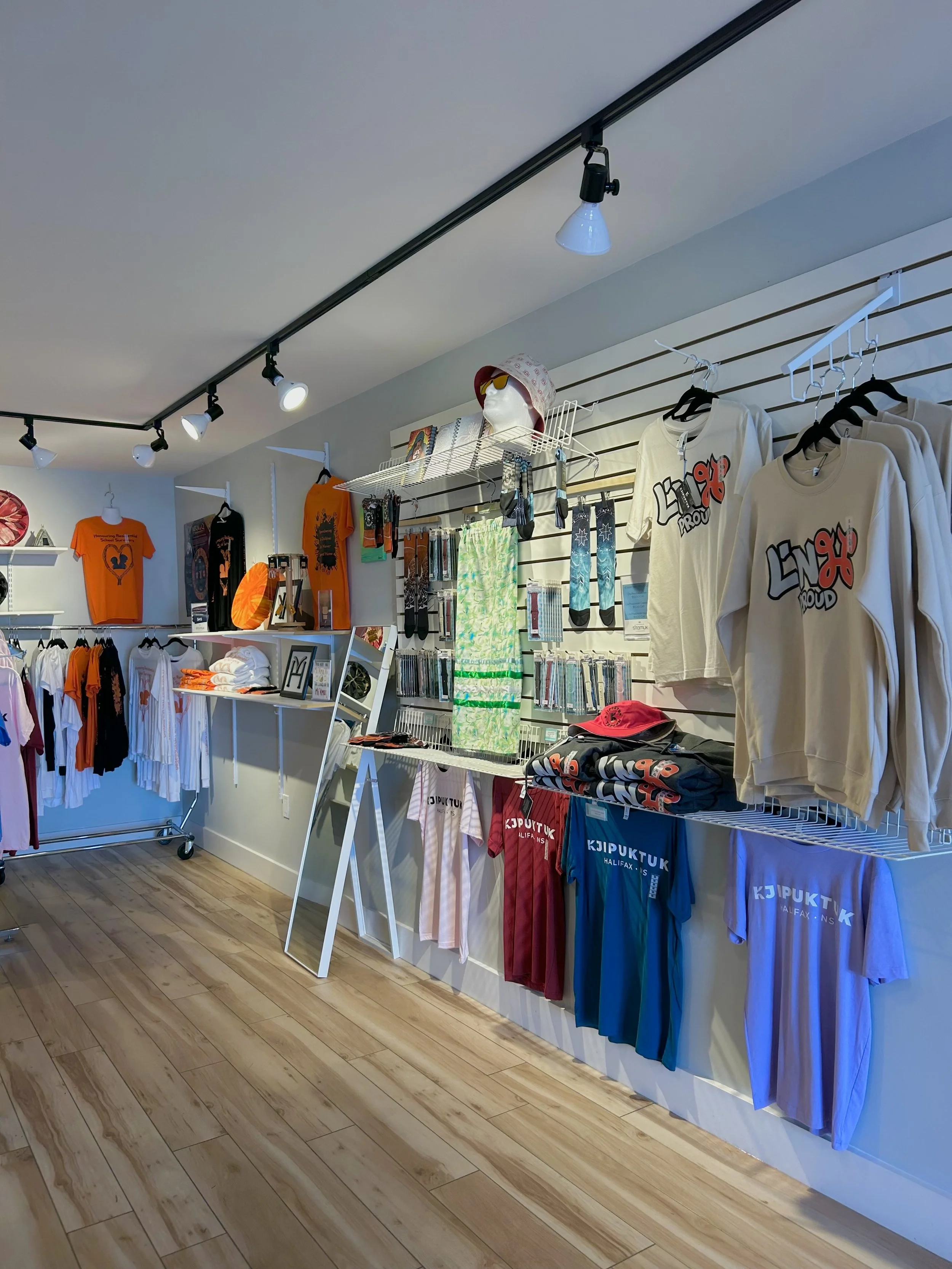
L’nu is the Mi’kmaq word for person; on our L’nu Proud clothing line the letter ‘U’ is replaced by the L’nu symbol. This was the name our people went by pre-contact, L’nuk (the people). The term Mi’kmaq derives from settlers misunderstanding our language. Commonly hearing the word Ni’tap (Nee-Dahb) meaning friend eventually became Micmac and Ni’kmaq (Neeg-mahg) meaning relative/family eventually becoming Mi’kmaq. L’nu was the word we had chosen for ourselves without colonial influence, which is why we chose L’nu proud. We can see this symbol in the surviving petroglyphs and hieroglyphic prayers from contact with missionaries. The oldest text we have is the Miawpuktek Mi’kmawey Prayer Book, printed in Austria in 1866; however, the surviving petroglyphs found on our land dating many centuries earlier.
L’nu is the Mi’kmaq word for person; on our L’nu Proud clothing line the letter ‘U’ is replaced by the L’nu symbol. This was the name our people went by pre-contact, L’nuk (the people). The term Mi’kmaq derives from settlers misunderstanding our language. Commonly hearing the word Ni’tap (Nee-Dahb) meaning friend eventually became Micmac and Ni’kmaq (Neeg-mahg) meaning relative/family eventually becoming Mi’kmaq. L’nu was the word we had chosen for ourselves without colonial influence, which is why we chose L’nu proud. We can see this symbol in the surviving petroglyphs and hieroglyphic prayers from contact with missionaries. The oldest text we have is the Miawpuktek Mi’kmawey Prayer Book, printed in Austria in 1866; however, the surviving petroglyphs found on our land dating many centuries earlier.